Which Gift Flowers Can Grow From Cuttings?
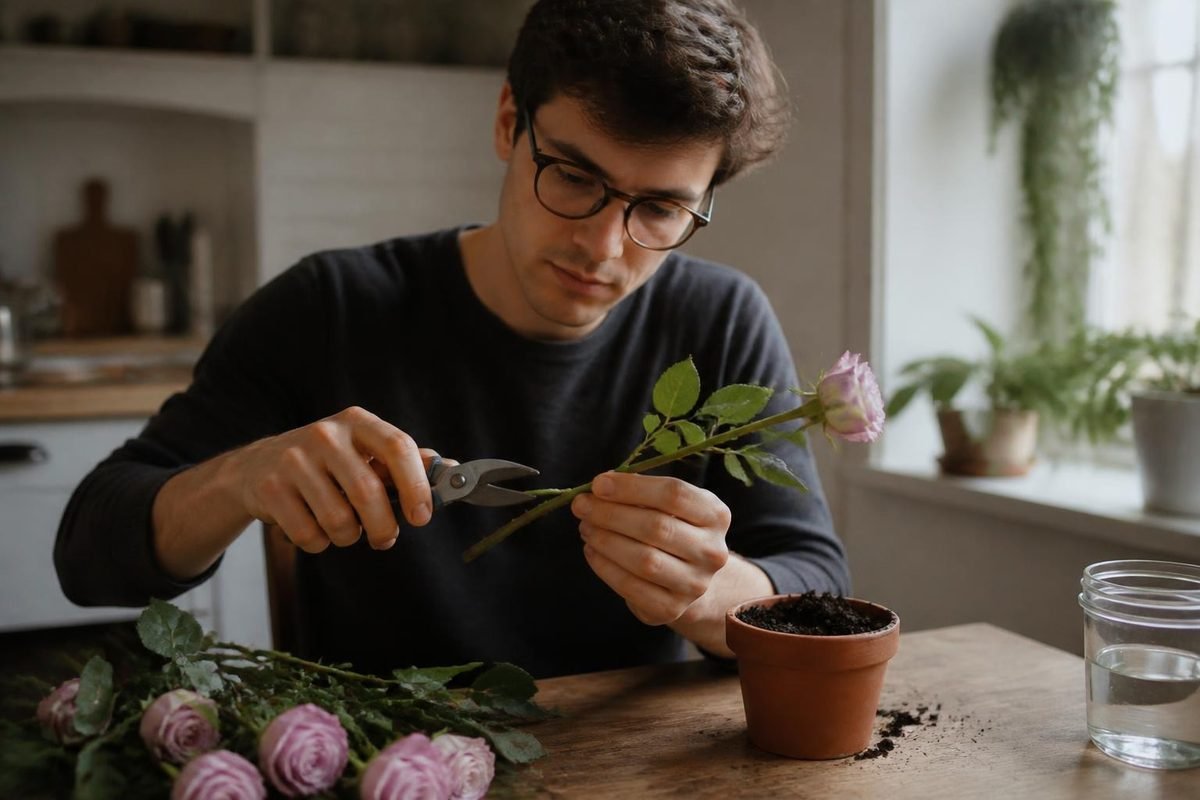
Roses, carnations, chrysanthemums and hydrangeas can sometimes be grown from cuttings taken from gifted flowers. Success is less certain with a bouquet than with fresh garden stems, but a healthy stem with leaves and nodes is worth trying.
Choose flowers with suitable stems
Roses are a familiar choice. Look for a firm green stem with several healthy leaves and nodes, the small points where leaves join the stem. Remove the flower before rooting so the cutting can direct its energy toward making roots.
Carnations and chrysanthemums can also root from stem cuttings. Nonflowering side shoots are useful if the bouquet has them. Hydrangeas may root too, although a bouquet stem that has been in a vase for several days is less promising than a fresh shoot.
Not every bouquet flower is a candidate. Tulips, daffodils and other bulb flowers grow from bulbs, not from cut flower stems. A cut tulip in a vase will not make a new bulb.
Check the bouquet first
Start as soon as you can. Choose stems that feel firm and look green, with no slimy patches or signs of rot. Avoid stems that have dried out completely or have spent a long time in cloudy vase water.
A cutting needs at least one node that can sit in the rooting medium. A bare length of stem with no visible nodes is unlikely to be useful. Keep any promising stems in clean water while you gather your supplies.
Prepare and plant the cuttings
Use clean, sharp scissors or pruners, a small pot with drainage holes, and a moist, free draining rooting mix. Clean tools help reduce the chance of introducing rot.
- Cut a healthy stem into a piece about 10 to 15 centimetres long, making the lower cut just below a node.
- Remove the flower and the lower leaves. Leave a few leaves near the top, but keep them clear of the mix.
- Insert the lower node into the moist mix and gently firm it around the stem.
- Place the pot in bright, indirect light. A clear plastic bag held above the leaves can help retain humidity.
- Keep the mix lightly moist, not waterlogged. Check regularly and remove any cutting that becomes soft or mouldy.
Give roots time to develop
Rooting can take several weeks or longer. New leaves alone do not guarantee that roots have formed, since a cutting may use stored energy to grow. After a few weeks, a gentle tug may reveal some resistance, though pulling hard can damage young roots.
Once a cutting has a good root system, move it to a pot of ordinary potting mix. Gradually expose it to normal room conditions if it has been under a bag. Some cuttings will not take, so trying several suitable stems improves your chances.
Common questions
Can I root bouquet flowers in water?
Some stems may form roots in clean water, but others rot. A moist rooting mix is a useful option, especially for rose cuttings.
Do I need rooting hormone?
No. Some cuttings root without it, though a rooting hormone made for plant cuttings can help. Follow the instructions on its label.
For more detail, see https://kunstforum-piaristen.com/blumen-in-der-wiener-kunstgeschichte-vom-stillleben-zur/